
The Best Martial Art For Beginners (Honest Guide)
For most beginners, the best martial art depends on your goal: boxing builds hands and striking, kickboxing builds cardio and power, BJJ builds grappling, and Krav Maga focuses on self defence. However, training a combination of strength, striking, grappling, and movement together builds a more complete, capable, and injury-resistant athlete than any single style alone.
You've got ten tabs open.
One says boxing is best. The next swears by Brazilian Jiu-Jitsu. A forum tells you Krav Maga is the only "real" self defence.
An hour in, you're more confused than when you started, and you still haven't trained a single day.
Almost every adult who walks through our doors in Western Sydney has been down this exact rabbit hole.
Invincible HQ in Wetherill Park is a holistic martial arts academy founded by Alan La. Across Invincible Worldwide, Alan and his coaches have trained thousands of adults and kids in Western Sydney and beyond. Our view on the "which style" question is simple: adult martial arts shouldn't make you choose one narrow skill. It should build the whole human.
What Are The Main Martial Arts Styles, And What Is Each Good For?
Every style has a strength. Knowing them helps you understand what you're choosing between.
Boxing — hands, footwork, and striking under pressure
Kickboxing — cardio, power, and full-body fitness
Brazilian Jiu-Jitsu (BJJ) — grappling and ground control
Taekwondo — kicking range and precision
Krav Maga — practical street self defence
Karate — traditional discipline and structured technique
MMA — not really a style, but a mix of striking and wrestling built for full-contact fighting
The catch: each one makes you strong in a single lane and exposed in the others. A pure boxer is lost on the ground. A pure grappler is exposed at striking range.
Is It Better To Learn One Martial Art Or Several?
For most people, the goal isn't to win a title in one discipline. It's to feel strong, capable, and confident.
That's where picking a single style works against you. One dimension of skill leaves the rest of your body and ability underdeveloped.
In over 20 years coaching in South-Western Sydney, we've found the adults who feel the best aren't the ones who mastered one style. They're the ones who built a complete foundation.
Martial arts vs gym training: A gym builds muscle but rarely teaches you to use it. A single martial art teaches a skill but often neglects real strength and mobility. Combining both is what produces a body that's strong, skilled, and durable.
What Does "Training The Whole Human" Actually Mean?
It means stacking the things most schools keep separate into one practice.
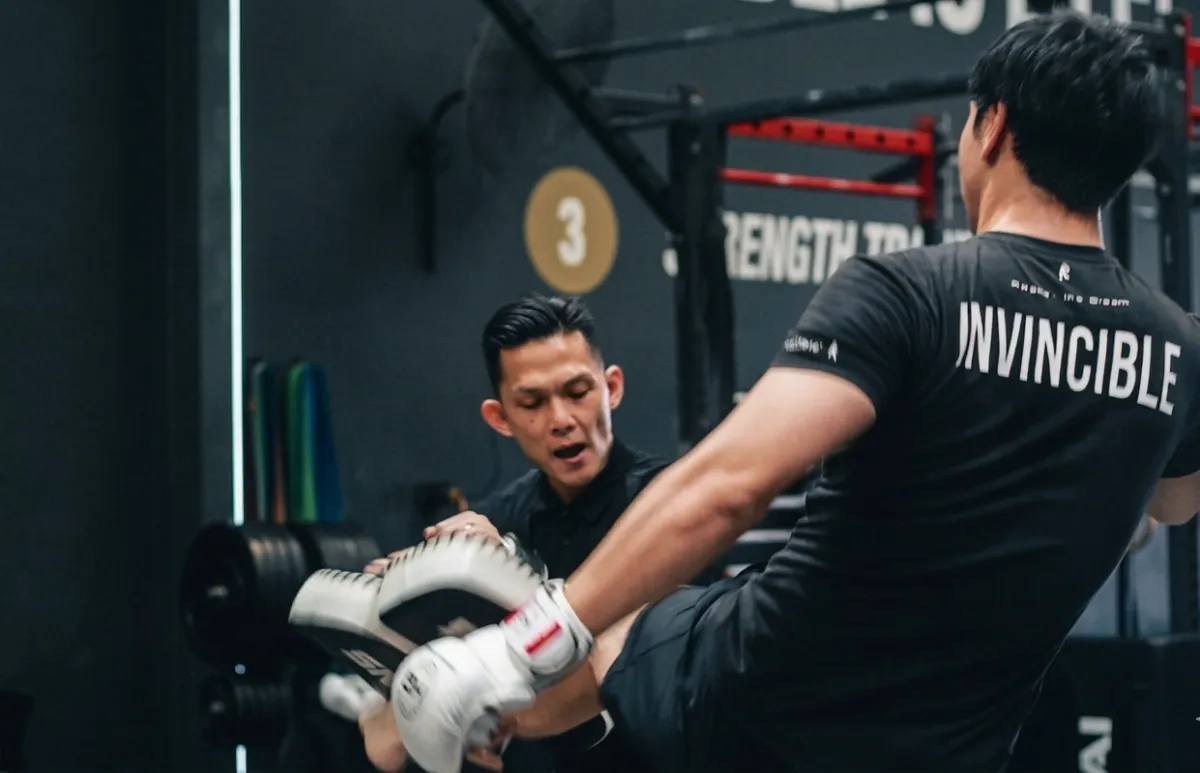
At Invincible HQ, an adult membership isn't one style. It's strength, striking, grappling, and movement together.
Strength and conditioning so your body can do what the skill demands
Kickboxing, takedowns, and grappling so your skillset is complete, not lopsided
Calisthenics, flexibility, and tricking so you stay mobile and pain-free for decades
Research supports the broad approach. The Australian Government's Physical Activity and Exercise Guidelines for Adults recommend a combination of cardio, muscle-strengthening, and flexibility work each week, which is exactly the spread a complete martial arts practice delivers in one session.
What is the best martial art for a complete beginner?
The best martial art for a beginner depends on your goal. Boxing and kickboxing suit those wanting striking and fitness, while BJJ suits people who want grappling. For overall capability, training a blend of strength, striking, grappling, and movement builds a more complete and injury-resistant beginner than committing to one style alone.
Should I start with boxing, BJJ, or kickboxing?
Boxing develops your hands and footwork, kickboxing builds cardio and power, and BJJ develops ground grappling. Rather than choosing just one, many beginners benefit most from a program that combines striking, grappling, and strength training so they don't become one-dimensional and develop balanced, usable skills from the start.
Is it better to train one martial art or several?
For most adults, training several disciplines together is better than mastering one. A single style creates strength in one area and gaps everywhere else. Combining striking, grappling, strength, and mobility produces a more complete, confident, and durable practitioner, which suits general fitness and self defence goals better than specialising early.
Can I start martial arts as an adult with no experience?
Yes. Most adults who start martial arts have no prior experience. A good academy meets beginners where they are, building fitness and technique gradually. Starting in your 30s, 40s, or beyond is common, and a program that includes strength and mobility work helps you progress safely without injury.
The "which style should I start with" question keeps people stuck in research mode for months. The better question is what kind of body and what kind of person you want to build.
That's the whole idea behind Invincible HQ. Not the hands. Not just the kicks. A complete practice that makes you strong, mobile, and capable for life.
If you're ready to stop researching and start training, book a free trial class at Invincible HQ in Wetherill Park. Adults across Western Sydney begin exactly where you are now.
AUTHOR BIO
Alan La is the founder of Invincible HQ in Wetherill Park, a multi-award-winning holistic martial arts academy dedicated to Building High Quality Humans. A Martial Arts Hall of Fame inductee and number one best-selling author, Alan has spent over 20 years training more than 12,000 students around the world, including South-Western Sydney. He helps adults and kids unlock real physical capability, confidence, and mental strength.
FAQ
Do I need to be fit before starting martial arts?
No. You build fitness by training, not before it. A good program scales to your current level, and your conditioning improves within the first few weeks. Waiting until you're "fit enough" is the most common reason people never start.
How long does it take to feel competent as a beginner?
Most beginners feel noticeably more coordinated and confident within the first one to two months of consistent training. Real skill takes longer, but the early sense of progress comes quickly, especially when strength and movement work is part of the program.
Is martial arts good for self defence?
Yes, particularly when your training includes both striking and grappling. Real situations don't stay in one range, so a complete practice prepares you better than a single specialised style. Just as important, training builds the awareness and composure that help you avoid trouble in the first place.
How many times a week should an adult train?
Two to three sessions a week is ideal for most adults starting out. It's enough to build steady progress and fitness without burning out, and it leaves room for recovery, which is where much of your strength and skill actually develops.