
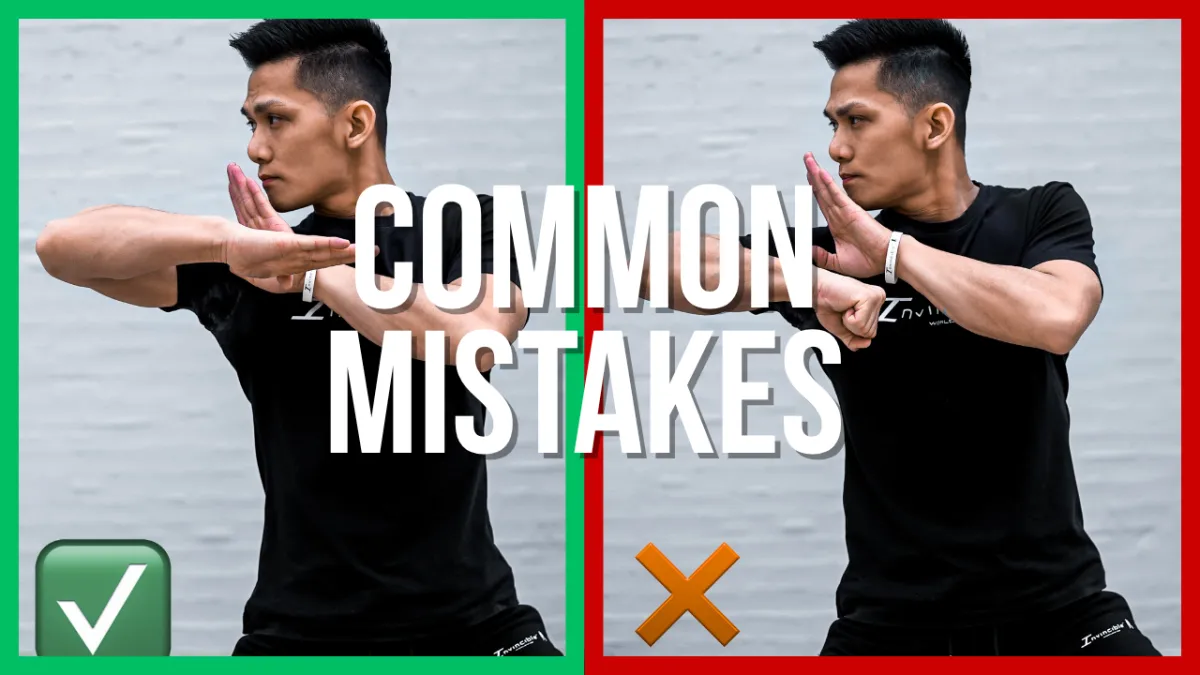
The Real Mechanics Behind a Proper Elbow Strike
A proper elbow strike generates power through relaxation and energy transfer, not muscle tension. Over-muscling the shoulder is a leading cause of rotator cuff strain in martial arts striking. Martial artists train five main elbow strikes, flat, upper, slashing, jab and spinning, each following a distinct line of energy through the joint.
What almost nobody expects is a martial arts class in Western Sydney where the loudest correction from the coach is "relax your arm."
That's a regular Tuesday at Invincible HQ, the martial arts academy Alan La built in Wetherill Park, Western Sydney. Alan has spent over twenty years coaching kids martial arts and adult martial arts classes, and he still teaches elbow mechanics the way he learned them: power comes from precision, not muscle. Invincible Worldwide, the wider brand he built around that idea, calls it Building High Quality Humans, and the elbow strike is one of the clearest places to see why.
Why Does Your Shoulder Hurt After Throwing an Elbow Strike?
The soreness most people feel around the shoulder after elbow work usually isn't from the strike itself. It's from the muscle fighting itself the whole way through the movement.
Muscled strike: shoulder locks from the first inch of movement, tension held throughout, joint absorbs the strain.
Relaxed strike: arm moves freely until the instant of contact, tension appears for a fraction of a second, then releases.
In over 20 years coaching in South-Western Sydney, the pattern has held across thousands of students. The harder someone tries to force a strike, the more likely they are to feel it in the joint the next day.
The Five Types of Elbow Strikes in Martial Arts
Each elbow strike follows its own line through the target, and each suits a different range and situation.
Flat elbow — a horizontal strike across the centre line, close range.
Upper elbow — driven upward, typically used at very close quarters.
Slashing elbow — a diagonal, cutting motion across the target.
Jab elbow — short, straight, thrown like a jab but with the point of the elbow.
Spinning elbow — generated through rotation rather than the arm alone, more advanced timing required.
Five angles. One shared principle underneath all of them: the power comes from the line and the release, not from how hard the arm is swung.
How Energy Transfer Works Better Than Force
Martial arts and gym training build strength differently. Gym training tends to isolate raw muscle output, lifting a fixed load through a fixed range. Martial arts trains coordination and relaxation under pressure alongside conditioning, so the same amount of effort produces more usable power. Neither replaces the other, but a student who trains martial arts learns a layer of body control that pure gym training rarely teaches.
At Invincible HQ, one of our members recently described the shift after learning to relax into her elbow strikes instead of forcing them: less effort, more impact, no soreness the next day.
Where Kids and Adults Learn This at Invincible HQ
Whether a student is in a kids martial arts class or an adult martial arts class, the same principle applies. Elbow mechanics are taught as part of the Invincible Juniors curriculum for kids and the adult program for grown members, always through the lens of control before power.
Frequently Asked Questions
What is the correct technique for an elbow strike?
A correct elbow strike relies on a relaxed shoulder and arm right up until the moment of impact, with tension appearing only on contact. Aim through a precise line to the target rather than muscling toward it. This produces more power with less strain than a tensed, forced strike.
Why does my shoulder hurt after doing elbow strikes?
Shoulder soreness, especially around the rotator cuff, usually comes from over-muscling the strike rather than the strike itself. Locking the shoulder and forcing the movement from the first inch creates unnecessary strain. Relaxing the joint until the point of contact reduces that load significantly.
What are the different types of elbow strikes in martial arts?
The five main elbow strikes are the flat elbow, upper elbow, slashing elbow, jab elbow and spinning elbow. Each follows a different angle and line of energy through the joint, and each is suited to a different range and situation in training or sparring.
How can I generate more power in an elbow strike without straining my shoulder?
Relax the arm and shoulder through the movement instead of tensing early, and aim through a specific point on the target rather than powering at it generally. Let tension appear only at the instant of contact, then release it immediately. This is what martial artists mean by energy transfer.
Do kids need to be aggressive to learn elbow strikes?
No. Elbow strikes taught properly are a lesson in precision and control, not aggression. Kids learn to notice tension in their own body, release it at the right moment, and stay calm under pressure, skills that carry over well beyond the training floor.
Is martial arts better than gym training for building real strength?
Martial arts and gym training build different kinds of strength. Gym training tends to isolate muscle output, while martial arts trains coordination, relaxation under pressure and precise energy transfer alongside physical conditioning. Neither replaces the other, but martial arts adds a control component gym training rarely teaches.
Where can I learn proper elbow strike mechanics in Western Sydney?
Invincible HQ in Wetherill Park teaches elbow strike mechanics as part of its adult and kids martial arts programs, with coaches trained specifically on energy transfer rather than muscle-driven technique. Classes are available for both kids and adults across South-Western Sydney.
Elbow strikes are a small part of the curriculum, but they carry the whole philosophy. Power that comes from control, not force. Precision that comes from calm, not effort. That's the same thing we're building in every student who walks onto the mats in Western Sydney, whether they're seven or forty-seven.
See what we do at Invincible HQ in Wetherill Park.
Alan La is the founder of Invincible HQ in Wetherill Park, a multi-award-winning holistic martial arts academy dedicated to Building High Quality Humans. A Martial Arts Hall of Fame inductee and number one best-selling author, Alan has spent over 20 years training more than 12,000 students around the world, including South-Western Sydney. He helps adults and kids unlock real physical capability, confidence, and mental strength.